
NFTs do not pay income just because you own them. Money comes from a sale, rental, loan, staking program, trading pool, or product connected to the NFT. Every model needs a paying user or a reward budget, and every model can lose money.
The practical test is simple: identify who pays, what event creates the payment, what costs reduce it, and how you get your money back. A creator needs a secondary sale for a royalty. A lender needs a borrower to repay. An NFT owner needs a player to rent the asset. If there is no paying user or documented reward source, there is no reliable income.
NFT income models at a glance
| Model | Who pays the income | What creates the return | Main risk to check |
|---|---|---|---|
| Creator royalties | Buyers and secondary-market activity | A configured payment on eligible sales | Royalties may not apply on every venue or transfer route |
| NFT rentals | Players, guilds, or temporary users | Access to an asset without buying it outright | Default, damage, fraud, and weak demand |
| NFT lending | Borrowers | Interest for supplying capital or assets | Liquidation, bad debt, platform, and smart-contract risk |
| NFT staking | A collection or platform reward budget | Locking an NFT or related token under program rules | Reward-token drops, lockups, dilution, and contract failure |
| Liquidity provision | Traders and pool fees | Supplying two assets to a trading pool | Loss from price changes, low volume, and pool failure |
| NFT products | Customers | Revenue from access, membership, media, or services | Revenue depends on a real product, not the token alone |
These are different businesses. Royalties need sales, lending needs repayment, rentals need users, staking needs a funded reward program, and products need customers. The less work you do yourself, the more your income usually depends on another person, platform, or market continuing to operate.
Creator royalties: income tied to secondary sales
Creator royalties are the most familiar NFT income model. A creator configures a percentage or payout rule, and a marketplace may send part of an eligible sale to the creator or collection treasury. The model works best when the collection has continuing demand, clear ownership, and a reason for buyers to trade again.
Royalties are not a fixed salary. No sale means no sale-based royalty, and the treatment can vary between marketplaces, aggregators, smart contracts, and direct transfers. A creator should read the actual marketplace terms and test a small transaction before forecasting revenue.
The OpenSea marketplace review explains why the sale price is not the same as creator proceeds. Review the live creator surfaces on Rarible, OpenSea, Magic Eden, and Zora before relying on an old fee or royalty screenshot.
The creator also needs an operating plan: new content, collection moderation, community support, metadata maintenance, and a reason for holders to remain active. A royalty percentage without demand is only a fee preference, not a business model. The NFT marketplace safety checklist helps creators check counterfeit collections and unsafe approvals before sending buyers to a marketplace.
NFT rentals: monetising temporary access
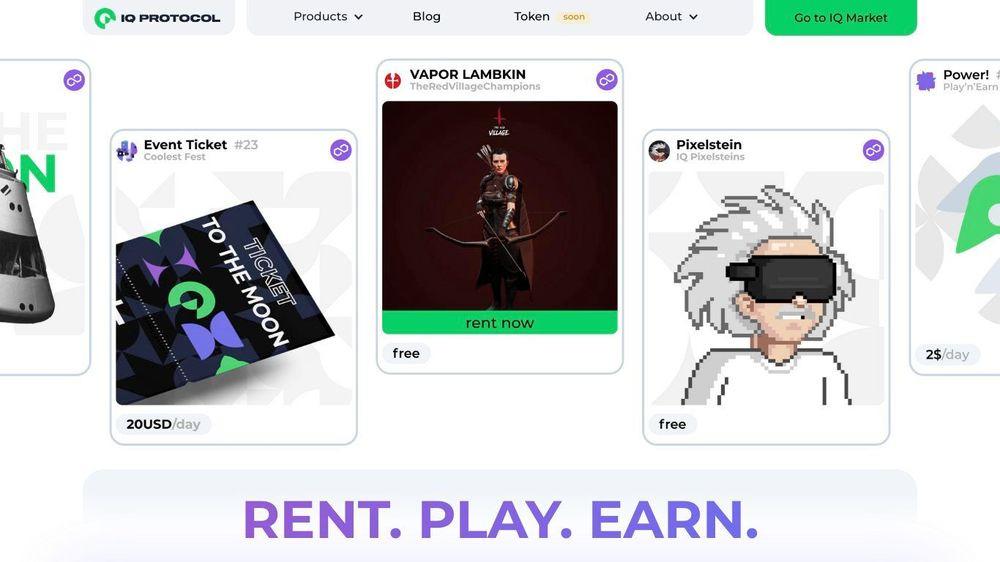
Rentals can work when the NFT gives access to a game item, event, membership, tool, or other benefit that a user needs temporarily. The owner keeps the asset while another user receives defined rights for a period. This can lower the entry cost for the user and create recurring income for the owner.
The rental agreement must state the daily price, rental period, user rights, return date, and what happens if the renter stops paying. Game items also need a system that lets the renter use the item without being able to sell or transfer it.
 decoding="async" referrerpolicy="no-referrer" decoding="async" src="/wp-content/uploads/2026/08/image-5-1.jpg" alt="" class="wp-image-10360" title="">
Rental demand is the key constraint. An owner may have a rare NFT but no reliable users willing to pay for access. An older Decentraland community discussion recorded only six listings on one rental site and ten on OpenSea at that time; this rental-market discussion is an anecdotal March 2022 snapshot, not evidence of today’s volume.
It still illustrates the practical test: count active listings and completed rentals before forecasting utilisation. Estimate maintenance, platform fees, downtime, support, and default losses before describing rent as passive. The comparison of in-game and standalone NFT markets explains the inventory and recovery boundaries that rentals introduce.
NFT lending: interest in exchange for risk
NFT lending means lending the NFT or lending money against an NFT as collateral. The return may be interest or an access fee. In exchange, the lender accepts the risk that the borrower will not repay or that the collateral will be difficult to sell.
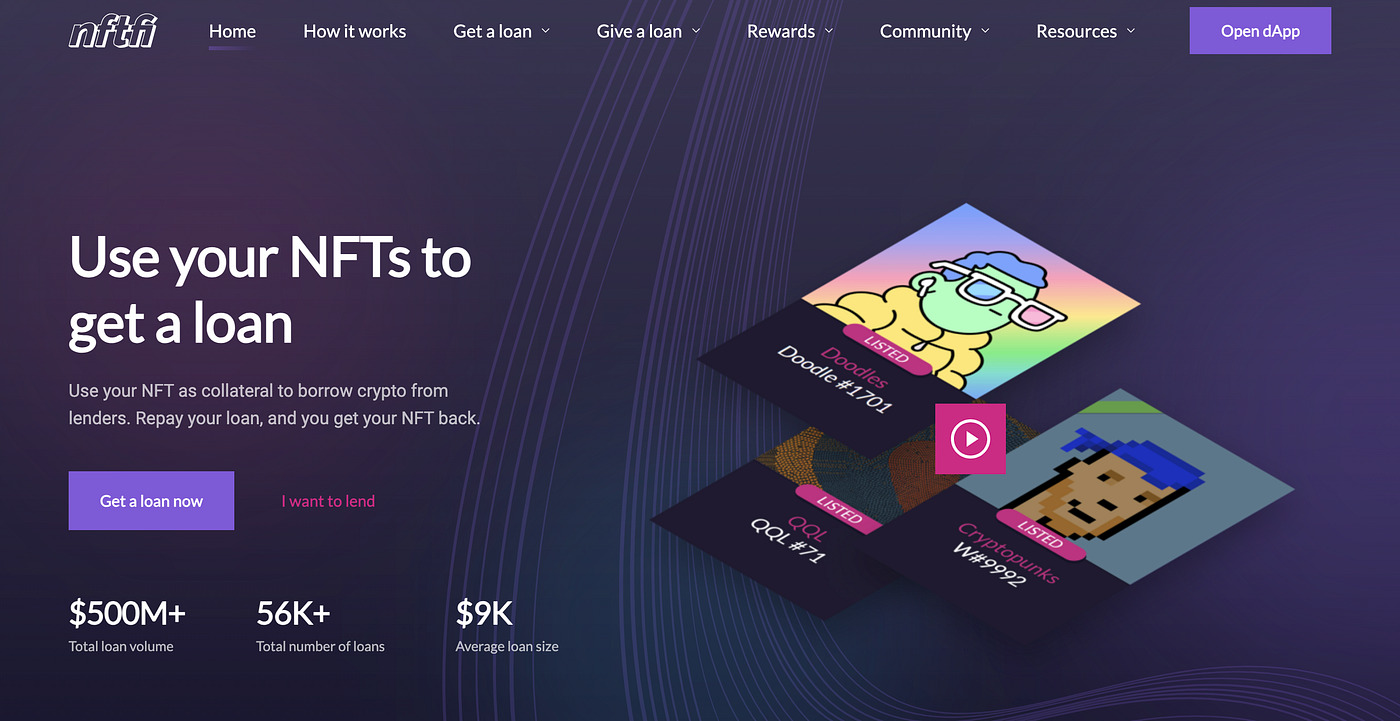
Before using a lending platform, check the loan length, interest calculation, collateral value, liquidation rule, repayment process, and withdrawal process. A high rate can mean that borrowers are scarce or that the collateral is difficult to sell. Never assume that a floor price is the amount you will recover.
Never treat a floor price as guaranteed collateral value. A collection can have a visible floor and still lack enough buyers to liquidate a specific trait or token. Review the NFT marketplace safety checklist before approving a contract or depositing an asset.
Splitting one expensive NFT into smaller shares
This model places one expensive NFT in a vault and issues smaller shares. Someone can then buy a share instead of the whole NFT. The share may trade in a pool, but it does not guarantee income.
The main risks are a thin market, a buyout vote, a contract pause, and a share price that falls below the NFT’s value. Check who holds the NFT, how a buyout works, how shares are redeemed, and whether buyers are actually available before treating shares as income.
Staking and liquidity pools: rewards with lockups and price risk
Some collections pay rewards when you lock an NFT or related token. A liquidity pool pays a share of trading fees when you deposit paired assets. The displayed annual percentage is not guaranteed income: the final result depends on the reward-token price, lock period, withdrawal rules, trading volume, and asset price movement.
Read the reward source before depositing. Check whether it comes from real trading fees, new token emissions, membership revenue, or a temporary treasury budget. If new tokens fund the reward, you may receive more tokens while their value falls. If paired assets move sharply, a liquidity pool can perform worse than simply holding the assets.
Use a simple net-return calculation:
- Expected rewards over the holding period.
- Minus platform fees, gas, and withdrawal cost.
- Minus estimated price decline or dilution.
- Minus the value of locked liquidity and time spent managing the position.
Simple break-even example
Assume an NFT costs $1,000 and a program advertises a 20% annual reward. If the NFT falls 70% while locked, it is worth about $300 before gas, claim costs, platform fees, or reward-token losses. The advertised reward does not automatically cover the $700 drop, and the owner may be unable to sell until the lock ends.
This is an illustration, not a market forecast or a typical return. It shows why the calculation must track both income and principal. Record the entry value, reward asset, unlock date, claim cost, withdrawal cost, and an exit price that can actually be achieved in the available market.
Costs that reduce the headline return
| Cost | When it appears | Why it matters |
|---|---|---|
| Asset acquisition | Before the first reward | Capital is exposed before any income is earned |
| Gas and approvals | Deposit, stake, claim, unstake, or withdraw | Several small transactions can consume low-value rewards |
| Platform or protocol fee | Rental, lending, marketplace, or pool activity | Gross income is not the amount the owner receives |
| Maintenance and security | Wallet management, wrapping, recovery, or monitoring | Passive does not mean operationally free |
| Lockup cost | While the asset is staked, rented, or fractionalized | The owner may miss an exit or a better use of capital |
The best NFT marketplaces guide helps compare transaction costs without mistaking a cheaper marketplace for a safer income model.
NFT products: the most durable income model
An NFT can support recurring income when it is attached to a real product: a membership, event pass, software feature, research service, digital collectible program, or game experience. In this model, the token is a delivery and ownership mechanism, while the customer pays for access or ongoing value.
The product must work even when speculation disappears. Define what the holder receives, how access is verified, when benefits expire, how refunds work, and whether the token can be transferred without breaking the customer relationship. A clear product often creates stronger recurring revenue than a collection that depends only on secondary-market trading.
Creators should separate product revenue from royalty revenue in their records. Product revenue may be forecast from subscriptions or sales; royalties depend on future marketplace activity. The NFT selling guide covers the metadata, rights, and listing records needed when the token represents a product or membership.
Conclusion
NFT income can be real, but it is rarely effortless. The strongest models connect the token to a repeatable source of demand: a creator collection that continues to trade, an asset that users rent, a loan with controlled collateral risk, a pool with genuine volume, or a product customers renew. Before choosing a model, identify the payer, trigger, costs, failure case, and exit path. If those details are unclear, the income claim is not ready to trust.
Frequently asked questions
Which NFT income model is easiest to understand?
Creator royalties and rentals are usually easiest to understand because the payment is tied to a sale or a rental period. They still depend on demand and do not guarantee a return.
What costs should be counted before buying an NFT for income?
Count the purchase price, gas, marketplace or protocol fees, approval transactions, reward-claim fees, maintenance, taxes where applicable, and the cost of selling or withdrawing later.
Why can a high NFT yield still lose money?
The NFT or reward token can lose more value than the income earned. Lockups can also prevent a sale during a market drop, while fees and contract problems can reduce the amount that reaches the owner.
What should be checked before staking or renting an NFT?
Check the contract, lock period, withdrawal rule, payer, reward source, user rights, fees, demand, and recovery process. Never deposit an NFT when the exit route is unclear.
Is NFT passive income guaranteed?
No. Income can stop when buyers, renters, borrowers, trading volume, or customers disappear. Treat every model as a business or market activity with costs and downside risk.
Disclaimer: This article is for research and editorial comparison purposes only. It does not constitute financial, investment, legal, or tax advice. NFT tools, marketplaces, fees, chain support, and live availability can change quickly, so verify current conditions on the official platform before making any decision involving funds, assets, or private keys.