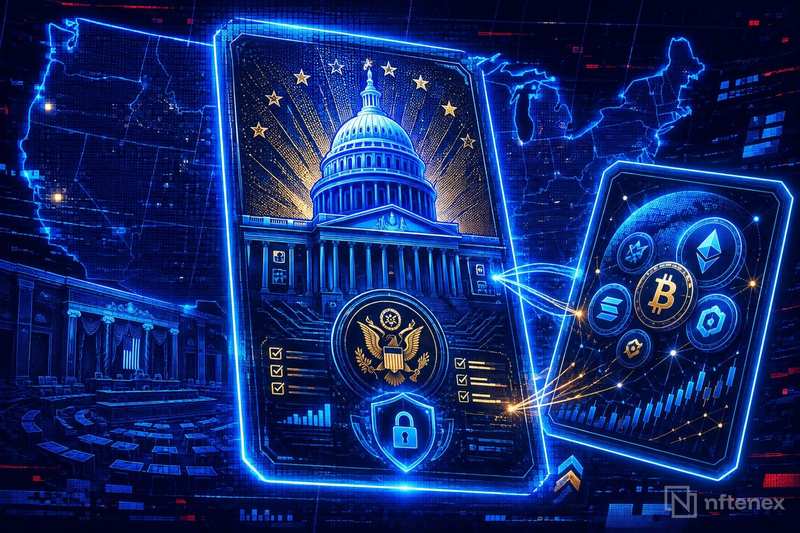

Ondo Finance is being framed as a test case for whether blockchain can move from crypto trading rails into the regulated plumbing of U.S. securities markets. The documented record is narrower than the headline heat, but it still shows a serious push to make tokenized ownership work inside existing market structure instead of outside it.
In its December 4, 2025 roadmap to the SEC, Ondo said targeted no-action, exemptive, and other relief should be considered for tokenization models linked to security entitlements held with DTC, while also arguing that policy should support permissioned, permissionless, and hybrid blockchains. That followed an April 24, 2025 meeting request with the SEC Crypto Task Force in which Ondo said it wanted to discuss wrapped, tokenized versions of publicly traded U.S. securities and possible sandbox relief.
TLDR Keypoints
- Ondo’s SEC roadmap asks for relief aimed at tokenized securities tied back to DTC-held entitlements, not a free-form crypto carveout.
- A DTC no-action pilot described by Commissioner Hester Peirce and the staff’s tokenized-securities statement show the SEC is already thinking in entitlement and recordkeeping terms.
- Ondo’s push also sits on top of real regulated infrastructure after Blockworks reported its Oasis Pro acquisition closed, adding broker-dealer, ATS, and transfer-agent capabilities.
What Ondo Is Actually Asking the SEC to Bless
In plain English, no-action relief means SEC staff say they would not recommend enforcement under a specific fact pattern; it is guidance on a narrow setup, not formal approval or a rewritten rulebook. That distinction matters in infrastructure debates like the one behind SEC DeFi Guidance Targets Wallets, Interfaces, Routing, where the line between software access and regulated market activity carries the real policy weight.
The best public precedent in the supplied record is the December 11, 2025 statement from Hester Peirce, which said DTC received no-action relief for a limited pilot where registered wallets could transfer tokenized entitlements directly while DTC kept the official books and records. That is why Ondo’s roadmap reads like market-structure engineering rather than a generic token launch pitch.
“it marks a significant incremental step in moving markets onchain.”
Hester M. Peirce
Policy Snapshot
Ondo’s roadmap asked for relief around DTC-linked tokenization models, the DTC pilot statement showed staff will entertain a constrained entitlement model, and the January 28, 2026 staff framework went further by describing how a third party may create a tokenized security entitlement by integrating DLT into the systems it uses to record holders.
Why the Request Matters for Blockchain-Based Securities Plumbing
The January 28, 2026 SEC staff statement is the clearest reason this story matters: staff explicitly described issuer-sponsored tokens, tokenized security entitlements, and synthetic structures instead of treating all tokenization models as the same thing. For digital ownership builders, including teams experimenting with consumer rails like Uquid Tickets Launches on TRON for Crypto Native Event Purchases, that kind of taxonomy is what turns blockchain from a wrapper into recognized infrastructure.
Ondo also has more than a policy memo riding on this debate. Blockworks reported on October 6, 2025 that the company completed its Oasis Pro acquisition, gaining SEC-registered broker-dealer, ATS, and transfer-agent infrastructure to operate regulated tokenized securities markets in the United States.
The Oasis Pro licensing stack described by Blockworks is why the story is bigger than the ONDO token itself. If a firm with broker-dealer and transfer-agent rails can pair DTC-linked entitlements with blockchain recordkeeping, the practical implications touch issuance, transfer, settlement, and secondary trading workflows instead of just wallet distribution.
Industry advocates are pressing that exact point. In an a16z crypto policy essay, Miles Jennings wrote that “By reducing reliance on intermediaries, these apps make it possible for tokenized securities to capitalize on the benefits of blockchain technology,” a view that lines up with Ondo’s request for permissioned, permissionless, and hybrid chain support while still stopping short of any SEC endorsement.
“By reducing reliance on intermediaries, these apps make it possible for tokenized securities to capitalize on the benefits of blockchain technology.”
Miles Jennings
Outlook for Tokenized Securities and the Industry Watchlist
The verified public trail in this case still points to an ongoing campaign for relief rather than a confirmed new SEC green light for a chain-specific recordkeeping model. Read together, Ondo’s December roadmap, the DTC pilot statement, and the January staff framework support a narrower conclusion: the policy direction is real, but the precedent is still being built one controlled fact pattern at a time.
That is why the watchlist extends beyond Ondo. A clear entitlement model in the SEC staff framework would become a reference point for other firms trying to reconcile blockchain rails with regulated assets, much as treasury-heavy stories like Strategy Buys 13,927 Bitcoin, Total Holdings Reach 780,897 BTC have become shorthand for another corner of institutional crypto adoption.
With the DTC pilot precedent, the Oasis Pro infrastructure, and the industry push for reduced intermediation already on the table, the next signals worth watching are whether SEC staff address DTC-linked tokenization models again and whether Ondo’s licensed stack starts appearing in new disclosures or launches. Until a fresh staff position is public, the cleaner interpretation is that Ondo is trying to fit blockchain into securities infrastructure through the front door of compliance rather than through a speculative workaround.
Disclaimer: This article is for informational purposes only and does not constitute financial or investment advice. Cryptocurrency and digital asset markets carry significant risk. Always do your own research before making decisions.