
The best NFT analytics tools in 2026 are Nansen, DappRadar, Zerion, bitsCrunch, Trait Sniper, Blur, and OpenSea. Nansen is the default for wallet intelligence. DappRadar is the cleanest orientation layer with no login required.
Related guides: Best NFT Tracking Tools in 2026, Best NFT Minting Tools in 2026, and Best NFT Marketplaces in 2026: Match the Platform to the Asset
These tools serve different jobs. Some track market flow. Some analyze wallet behavior. Some provide data infrastructure for builders. The right pick depends on whether you need orientation, deep research, or API-grade data.
| Tool | Best for | Free tier | Chain focus | Score |
|---|---|---|---|---|
| Nansen | Wallet intelligence | Limited free | Ethereum, multi-chain | 4/5 |
| DappRadar | Broad market orientation | Full public | Multi-chain | 3.5/5 |
| Zerion | Cross-portfolio tracking | Full public | Multi-chain | 3.5/5 |
| bitsCrunch | NFT data infrastructure | API access | Multi-chain | 3/5 |
| Trait Sniper | Rarity and trait lookups | Free rarity tools | Ethereum | 3/5 |
| Blur | Speed-sensitive trading | Marketplace access | Ethereum | 3/5 |
| OpenSea | Marketplace discovery | Full public | Multi-chain | 3/5 |
8 Best NFT Analytics Tools Reviewed (2026 List)
If you are still exploring the broader NFT data landscape, compare these picks against NFT tracking tools or NFT APIs.
Here, we reviewed live public surfaces for all eight platforms on 2026-07-14, covering homepages, collection pages, market overviews, and deeper tool-specific routes where accessible.
DappRadar
DappRadar gives a broad, understandable view of marketplaces, collections, and game-linked NFT activity. From the live public surface we reviewed, it felt like the cleanest orientation option in this list.
That is a real strength for editorial teams and casual researchers. Advanced users may outgrow it once wallet-level conviction signals matter more than orientation.
Important: A CryptoCurrency community thread on Reddit confirmed DappRadar is shutting down. User reactions show it was widely trusted for market orientation but could not sustain a revenue model. Verify current availability before building a workflow around it.
Best for:
– broad market mapping and newsroom orientation
– fast cross-category comparison with no login
Tradeoff:
– advanced wallet intelligence requires a deeper specialist tool
– shutdown status needs verification before use
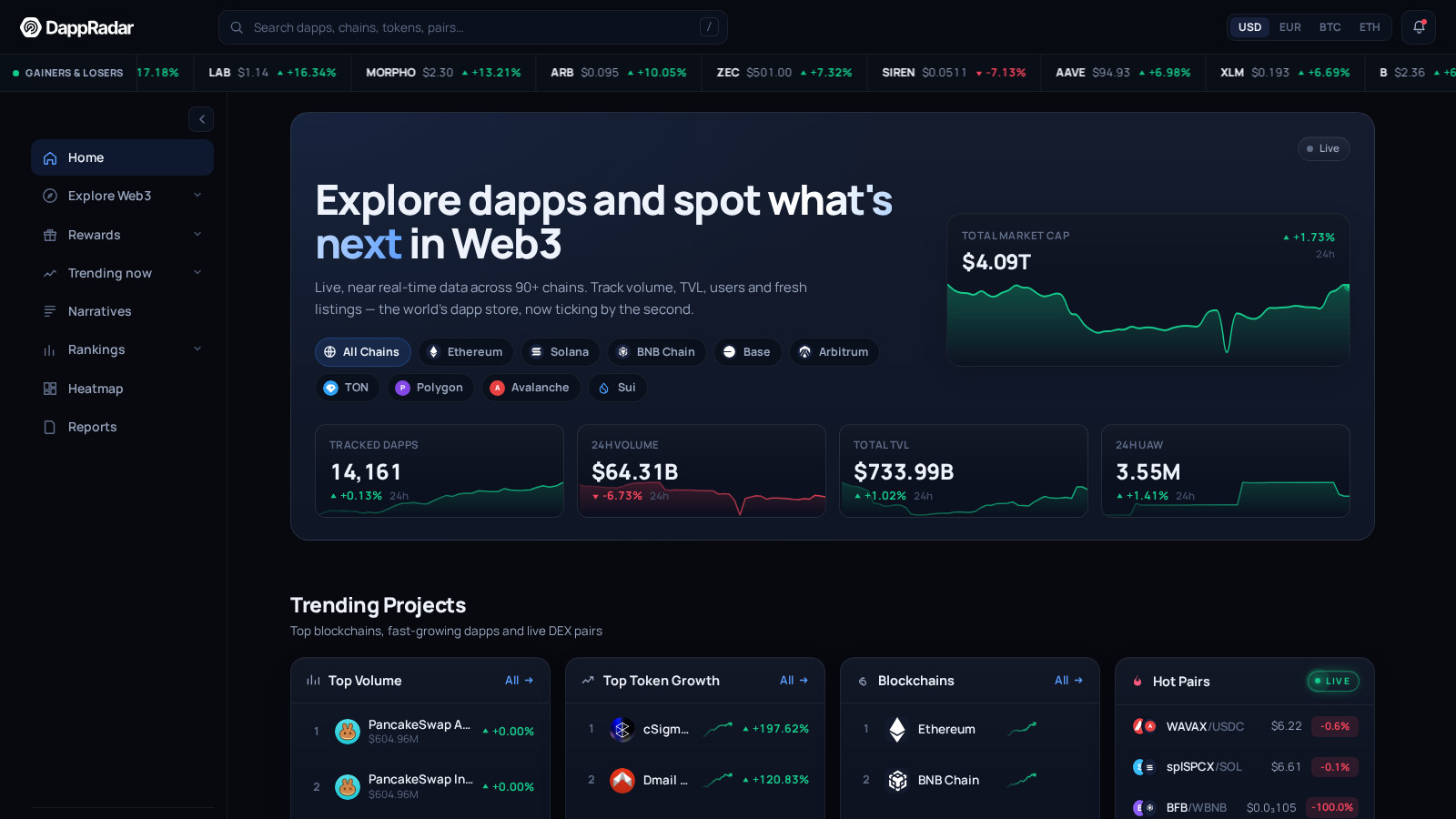
Clicking into the NFT section loaded collections, trending activity, and category filters without requiring an account. The data is not deep by Nansen standards, but the speed of orientation is genuine.
The collections ranking page showed volume, floor, and activity sorted into columns. For anyone who has used similar tools before, this surface takes about ten seconds to read. That accessibility is the whole point.
Nansen
Nansen matters because wallet behavior still drives interpretation. If smart-money clusters, rotation patterns, or large-holder activity are central to your workflow, Nansen is usually more actionable than simpler dashboard tools.
This is the clearest example of a tool that can be extremely useful and still be the wrong default for casual readers. If your workflow does not depend on wallet intelligence, Nansen feels like too much instrument panel.
Best for:
– wallet intelligence and smart-money tracking
– fund and whale activity research
– higher-conviction trade research
Tradeoff:
– most useful features are behind a paid plan (approx. USD 150/mo)
– too specialized for users who mostly need market overviews
Zerion
Zerion is useful because NFT ownership rarely lives alone. For many users, NFTs, tokens, wallets, and onchain behavior form one portfolio story. Zerion fits that broader visibility model.
From the public product surface we reviewed, Zerion felt less like a niche NFT analytics dashboard and more like a multi-asset ownership environment. That is a strength if your real workflow is portfolio-led. It is a weakness if you want a dedicated NFT market workstation.
Best for:
– multi-asset portfolio tracking
– users who track tokens and NFTs together without switching tools
Tradeoff:
– not the most NFT-native research environment for specialized traders
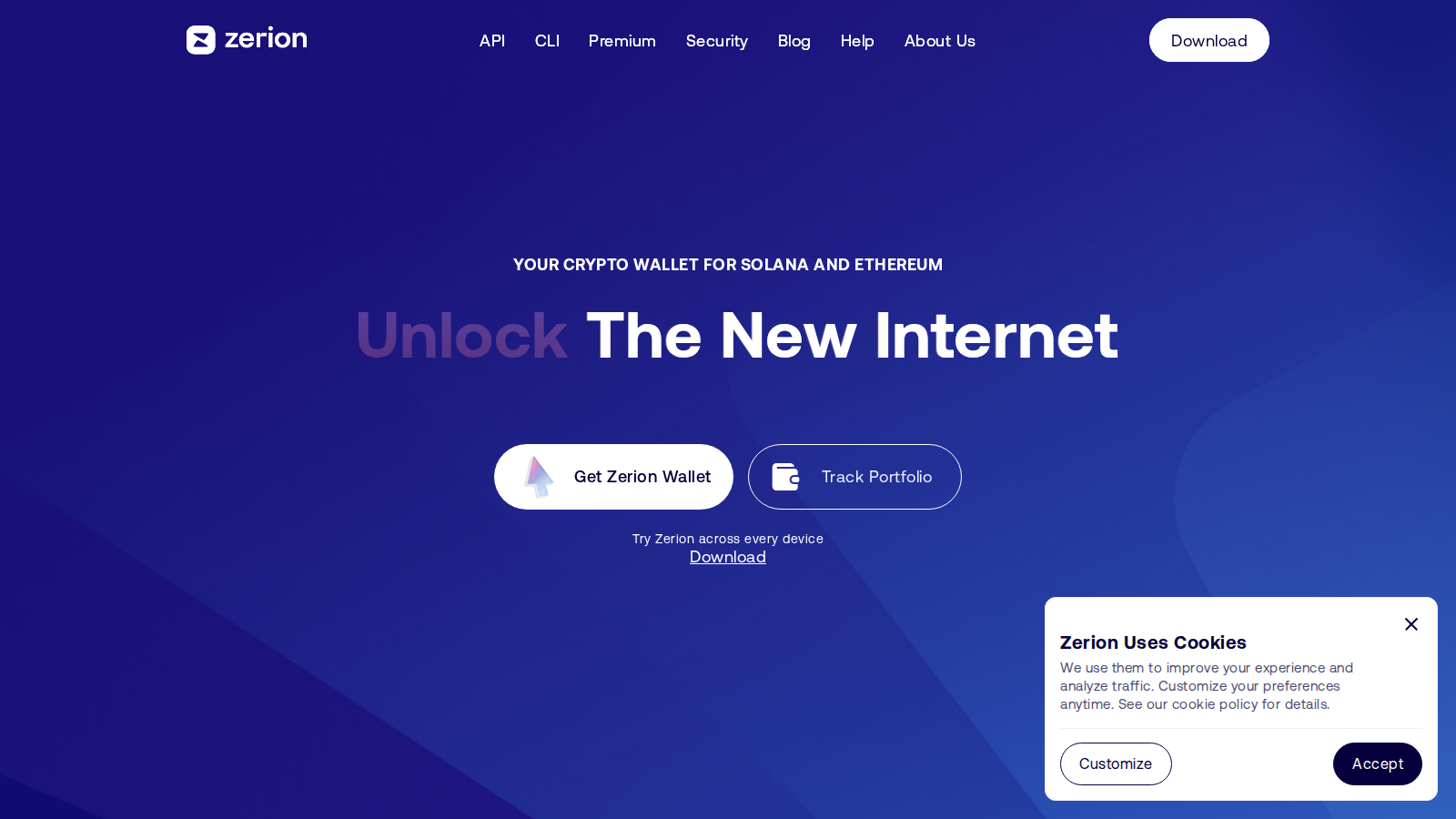
Zerion’s dedicated NFT page was calmer than expected. NFTs sit inside the broader portfolio context rather than dominating the interface.
bitsCrunch
bitsCrunch is more interesting to builders and data-heavy teams. Its value proposition is closer to NFT intelligence infrastructure than a simple ranking site. That makes it relevant to products, not just individual readers.
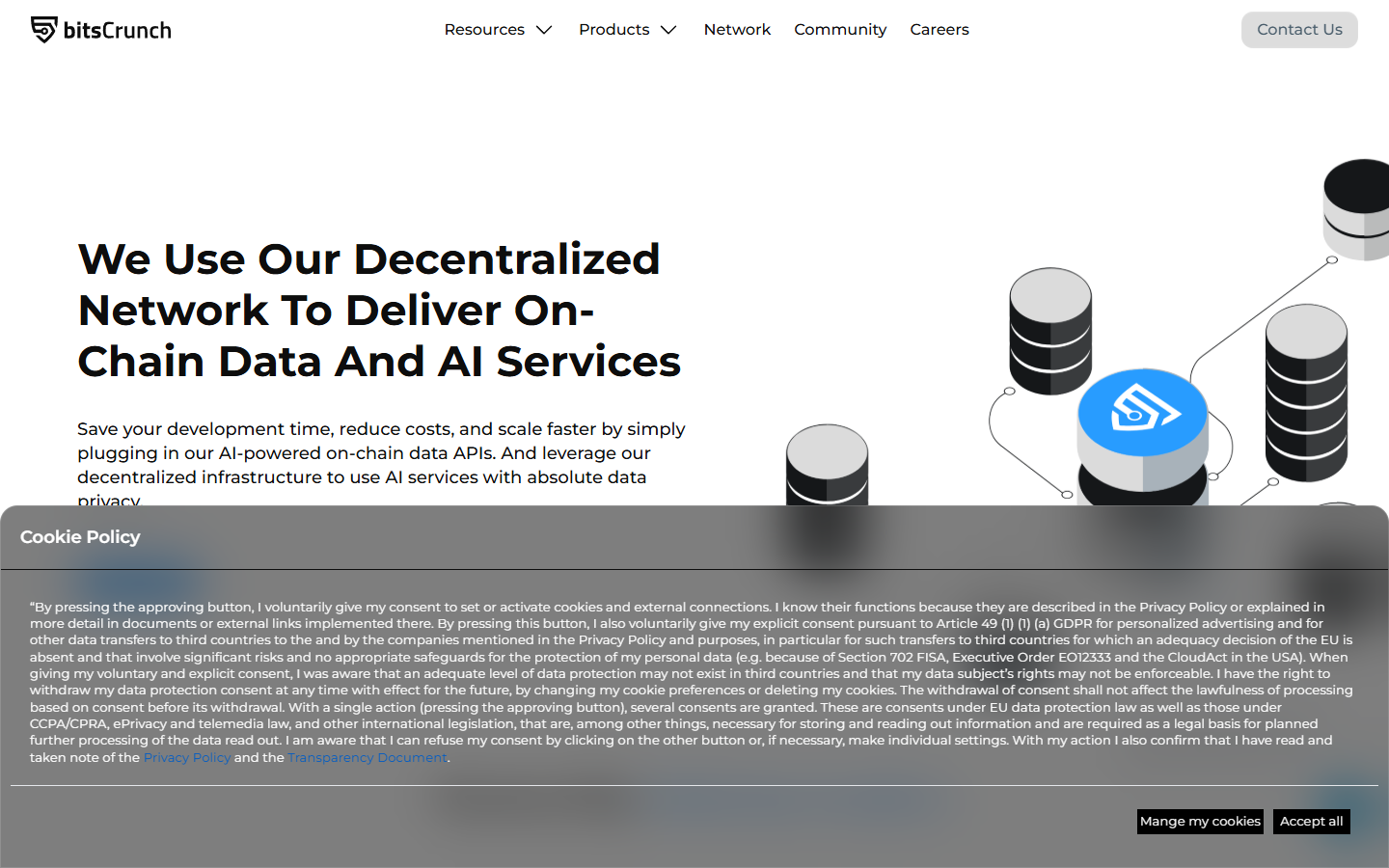
The homepage leads with data infrastructure language rather than trader-facing tools. It promises structured NFT intelligence for teams building on top of data. That framing makes immediate sense for a builder but would feel unfamiliar to a trader visiting for the first time.
Best for:
– teams building on NFT data
– analytics products and dashboards needing structured intelligence
Tradeoff:
– less immediately intuitive than a pure front-end tool
– API-grade use requires paid plans for production volume
Trait Sniper
Trait Sniper remains relevant where rarity speed and collection-specific edge still matter. It is not the most comprehensive analytics environment, but it does not need to be.
Note: Trait Sniper is currently paused. NFTNerds offers a comparable rarity and trait filtering workflow. The screenshot below shows NFTNerds, captured as the live alternative.
Best for:
– rarity-focused traders
– fast collection workflows and execution-oriented use cases
Tradeoff:
– weak as a standalone market research stack
– currently paused; verify availability before relying on it
Blur
If your workflow depends on active marketplace execution speed, Blur-adjacent data and interfaces remain relevant. They matter less as broad editorial tools and more as specialized market activity surfaces.
Best for:
– active NFT traders in fast-moving bid and liquidity environments
Tradeoff:
– not designed as an explanatory or beginner-facing analytics environment
– Ethereum-focused; limited multi-chain reach
OpenSea analytics
OpenSea analytics remains useful because marketplace discovery still matters. Even if power users prefer deeper tools, OpenSea’s visibility into listings, item context, and marketplace behavior still influences how collections are perceived.
A discussion in NFT creator communities on Reddit lists OpenSea alongside deeper tools in DYOR stacks, with commenters noting it remains the starting point for creator and collection discovery regardless of the tools used for analysis.
Best for:
– marketplace-native research and creator teams
– beginner and intermediate users
Tradeoff:
– not sufficient on its own for advanced wallet or cross-platform intelligence
Ranking scorecard
Scored out of 10 per category. Total out of 60.
| Tool | Data depth | Free access | Chain coverage | Wallet intelligence | Builder API | UX clarity | Total |
|---|---|---|---|---|---|---|---|
| Nansen | 9 | 4 | 7 | 10 | 6 | 7 | 43 |
| Zerion | 6 | 9 | 9 | 5 | 6 | 8 | 43 |
| DappRadar | 6 | 10 | 9 | 4 | 4 | 9 | 42 |
| bitsCrunch | 7 | 6 | 8 | 5 | 9 | 5 | 40 |
| OpenSea | 4 | 10 | 8 | 3 | 4 | 8 | 37 |
| Trait Sniper | 5 | 9 | 4 | 3 | 3 | 9 | 33 |
| Blur | 5 | 8 | 3 | 4 | 3 | 7 | 30 |
Quick picks
- Best for wallet intelligence: Nansen
- Best all-purpose starting point (free): DappRadar
- Best for cross-portfolio users: Zerion
- Best for builder teams: bitsCrunch
- Best for rarity workflows: Trait Sniper
What does each tool cost?
| Tool | Free tier | Paid plans | Notes |
|---|---|---|---|
| Nansen | Limited (some wallet labels) | From approx. USD 150/mo | Most value is behind paywall |
| DappRadar | Full public | Pro tier exists | NFT data fully free without login |
| Zerion | Full portfolio view | Premium features available | Wallet-connected features free |
| bitsCrunch | API access (rate-limited) | Enterprise plans | Paid for production API use |
| Trait Sniper | Free rarity lookups | Pro tier available | Currently paused; use NFTNerds as alternative |
| Blur | Marketplace is free | No paid analytics tier | Analytics are marketplace-native |
| OpenSea | Full public | No separate analytics plan | Analytics embedded in marketplace |
Nansen is the most cost-gated tool in this list. The wallet intelligence layer that makes it useful is almost entirely behind the paid plan. For researchers without a budget, DappRadar, and OpenSea give the most usable free access.
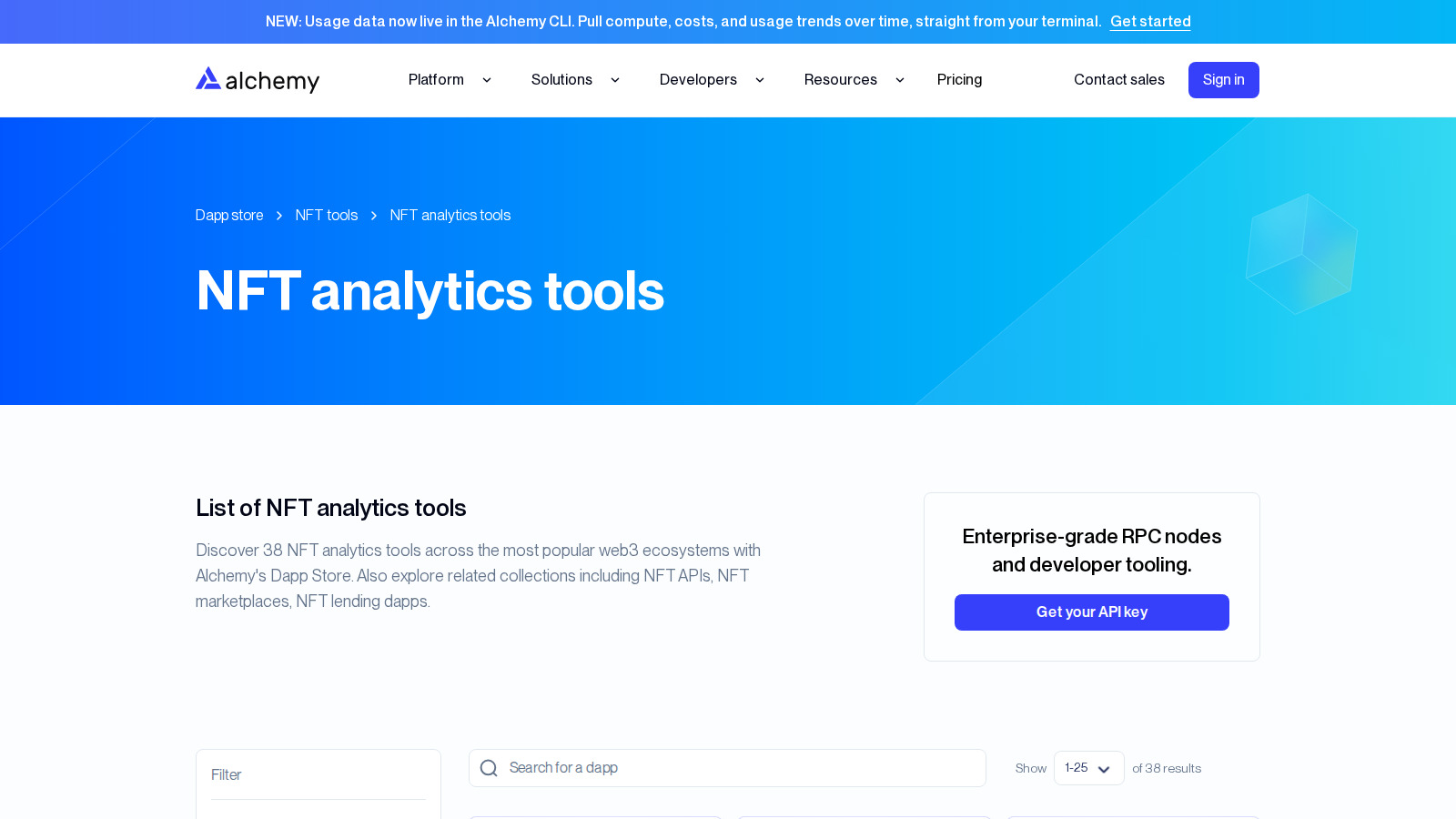
What the Alchemy ecosystem page revealed
The Alchemy ecosystem page was unexpectedly clarifying. Rather than presenting a single analytics product, it maps the landscape of tools, providers, and data layers that sit around NFT analytics.
Seeing that map made the whole category more honest: there is no single product that does all of this. That is useful context before committing to any one tool.
Where analytics tools still fall short
The biggest weakness in NFT analytics is that dashboards can turn thin liquidity into false confidence. A sudden floor move or a handful of visible wallets can look like conviction when it is short-lived rotation.
The second weakness is chain fragmentation. Some tools still handle one ecosystem better than another. Be skeptical of universal rankings unless the coverage model is clearly stated.
The third weakness is over-reliance on visible market signals. Analytics can show what happened, but it does not explain why it happened.
What this review verified and what it did not
| Claim | Status |
|---|---|
| DappRadar NFT section and collections rankings browsed directly | Verified |
| Zerion NFT surface and Explore page loaded directly | Verified |
| Nansen homepage confirmed as wallet-intelligence product | Verified |
| bitsCrunch homepage confirmed as NFT data infrastructure product | Verified |
| Trait Sniper homepage loaded and status confirmed as paused | Verified |
| Blur homepage and collections page browsed directly | Verified |
| OpenSea rankings and trending pages browsed directly | Verified |
| Authenticated dashboard accessed (any platform) | Not verified. Core analytics surfaces are public |
| Paid plan or premium data accessed | Not verified |
| Live wallet tracking completed with real assets | Not verified |
| Alert notifications triggered and received | Not verified |
Frequently asked questions
Which NFT analytics tool is best for beginners?
DappRadar is the easiest starting point. No login, no setup, and the NFT data is immediately readable. OpenSea analytics is also useful for beginners focused on specific collections or marketplace behavior.
Is Nansen worth the cost for NFT research?
Nansen is worth the cost if wallet intelligence is central to your workflow. If you mostly need collection trends or market overviews, the free tiers of DappRadar cover most of what you need.
Can I use multiple tools together?
Yes, and that is usually the better approach. DappRadar for orientation, Nansen for wallet signals, and Zerion for portfolio context is a stack that covers most professional use cases without redundancy.
Is DappRadar still operating?
DappRadar announced it is shutting down. Verify current availability directly at dappradar.com before incorporating it into any workflow.
What is the difference between an NFT analytics tool and an NFT tracking tool?
Analytics tools focus on market-wide or collection-level signals: volume, floor trends, wallet behavior. Tracking tools follow specific wallets, collections, or items in real time. Some products do both; most specialize in one. See our NFT tracking tools guide for the tracking-focused picks.