
Key Points:
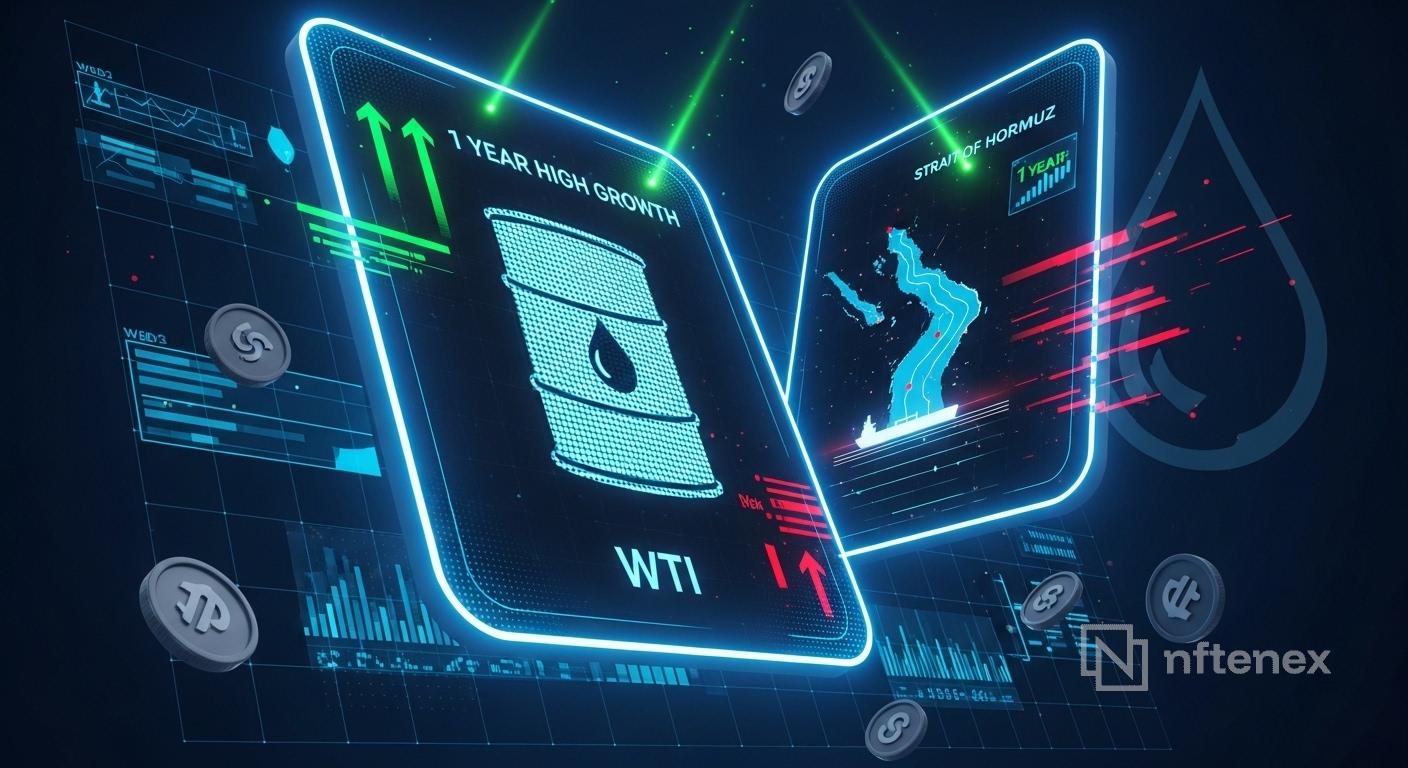
- WTI surged to a one-year high on renewed supply-risk premium.
- Risk-off tone emerged; Bitcoin and gold dipped as investors reassessed geopolitics.
- Equities weakened as crude’s surge highlighted sensitivity to disruptions and bottlenecks.
WTI crude oil jumped to a one-year high today as a renewed supply-risk premium filtered into energy markets. The move unfolded alongside a broader risk-off sentiment, with Bitcoin and gold dipping intraday while investors reassessed geopolitical risk.
Equities weakened as energy prices climbed, reflecting sensitivity to potential supply disruptions and transport bottlenecks. U.S. stocks were under pressure as crude resumed its surge, as reported by Nasdaq.
Geopolitical drivers: U.S.–Iran tensions and Hormuz chokepoint
Renewed retaliatory strikes from Iran have raised market anxiety, pushing energy prices higher and U.S. futures lower, according to AP News. The prospect of further escalation keeps a supply-risk premium embedded in crude benchmarks.
Analysts warn that any disruption to flows through the Strait of Hormuz, the critical chokepoint for global crude and refined products, could quickly lift consumer fuel costs. U.S. gas prices could push well above $3 per gallon if strikes on Iran impede shipments, as reported by Scripps News.
Market cross-currents have been consistent with classic flight-to-safety dynamics. “Markets were exhibiting a classic ‘risk-off mode’: gold surged, oil shot up, while equities and Bitcoin retreated,” said Elias Haddad, analyst at Brown Brothers Harriman.
Institutional views also highlight safe-haven positioning and supply sensitivity. UBS Global Wealth Management has noted that hedging demand has supported gold in recent weeks, and that any Middle East supply interruption or infrastructure damage could push oil prices higher while weighing on broader risk assets.
Inflation and Federal Reserve implications
Economists suggest a high threshold before the broader U.S. economy feels severe strain. Crude would need to climb roughly 50% toward about $125 a barrel for the conflict to inflict significant economic pain domestically, according to Barron’s.
Higher oil typically lifts headline inflation and can slow disinflation progress. Strikes on Iran risk boosting global inflation and could reduce or delay interest-rate cuts by major central banks, as assessed by Capital Economics, implications the Federal Reserve would need to weigh against its price-stability mandate.
At the time of this writing, Bitcoin (BTC) is around 71,055, with medium volatility near 3.86%, a neutral RSI of 55.73, and sentiment reading “Bearish.” Over the last 30 sessions, 12 were green days (40%), with the 50-day SMA at 76,546 and the 200-day SMA at 96,527.
| Disclaimer: The content on nftenex.com is provided for informational purposes only and should not be considered financial or investment advice. Cryptocurrency investments carry inherent risks. Please consult a qualified financial advisor before making any investment decisions. |