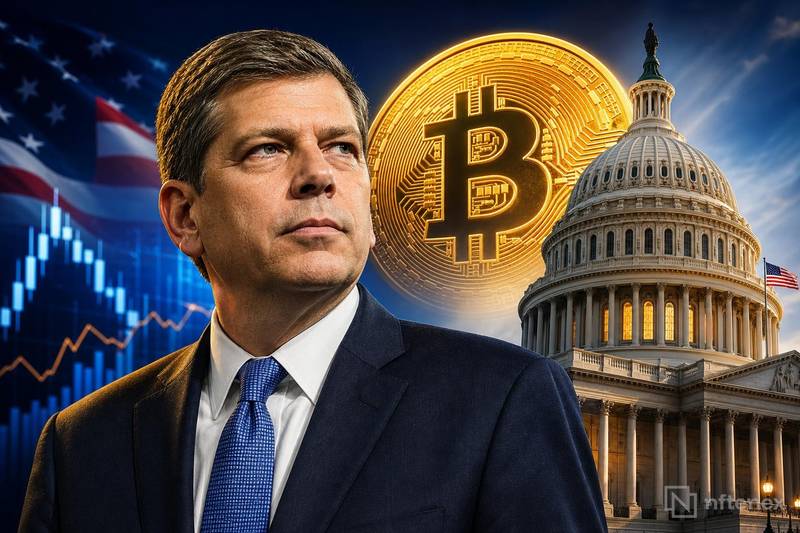
Rep. Begich Introduces Bitcoin Bill on Strategic Importance in the U.S.
- Stacey George
- May 22, 2026
- Policy
- 0 Comments
Rep. Nick Begich has introduced legislation aimed at establishing a Strategic Bitcoin Reserve in the United States, framing Bitcoin as an asset of “strategic importance” to the nation’s economic future.
The Alaska congressman announced the bill through his official congressional office, positioning himself as a lead sponsor of the effort to formalize Bitcoin’s role in U.S. policy.
TLDR: KEY POINTS
- Rep. Begich introduced legislation to establish a Strategic Bitcoin Reserve in the U.S.
- The bill frames Bitcoin as having “strategic importance,” elevating it beyond a speculative asset in policy language.
- The legislation follows a March 2025 executive order that created a Strategic Bitcoin Reserve and Digital Asset Stockpile at the federal level.
Why “strategic importance” is a deliberate policy signal
The phrase “strategic importance” is not casual language in a legislative context. It places Bitcoin in the same rhetorical category as energy reserves and critical minerals, assets the U.S. government actively stockpiles and protects as matters of national interest.
This framing builds on an existing federal foundation. In March 2025, the White House issued an executive order formally establishing a Strategic Bitcoin Reserve alongside a broader U.S. Digital Asset Stockpile. Begich’s bill would give that concept a congressional mandate, moving it from executive action to codified law.
For lawmakers, the distinction matters. Executive orders can be reversed by a successor administration. Legislation, once signed, carries more permanence and signals bipartisan durability to markets and international observers.
Regulatory and economic implications
Treating Bitcoin as strategically important could shift how U.S. regulators approach the asset. Agencies that currently treat Bitcoin primarily as a commodity or taxable property would need to reconcile those frameworks with a congressional designation of national significance.
The bill also fits into a broader pattern of lawmakers engaging with digital assets as a competitive licensing and policy issue rather than purely a consumer protection concern. Countries and jurisdictions worldwide have been moving to establish clearer crypto regulatory frameworks, and U.S. legislators appear increasingly motivated to keep pace.
What this means for crypto markets and industry observers
Legislative introductions are early-stage events. The bill must pass through committee, survive floor votes in both chambers, and receive a presidential signature before it becomes law. Most introduced bills never reach that finish line.
Still, the introduction itself carries weight for market sentiment. Recognition language from a sitting congressman reinforces the narrative that Bitcoin is gaining legitimacy within traditional power structures. Companies navigating U.S. regulatory uncertainty, including those expanding their crypto trading operations, will watch the bill’s progress for signals about the regulatory direction.
The bill also arrives as the broader digital asset ecosystem continues to evolve. Developments like stablecoin pilots in Asia underscore how governments globally are moving beyond debate and into active experimentation with digital asset policy.
Investors and industry participants should note that no concrete policy changes take effect from an introduction alone. The bill’s committee assignment, co-sponsor list, and hearing schedule will determine whether it gains real legislative momentum in the months ahead.
Disclaimer: This article is for informational purposes only and does not constitute financial or investment advice. Cryptocurrency and digital asset markets carry significant risk. Always do your own research before making decisions.