
Key Points:
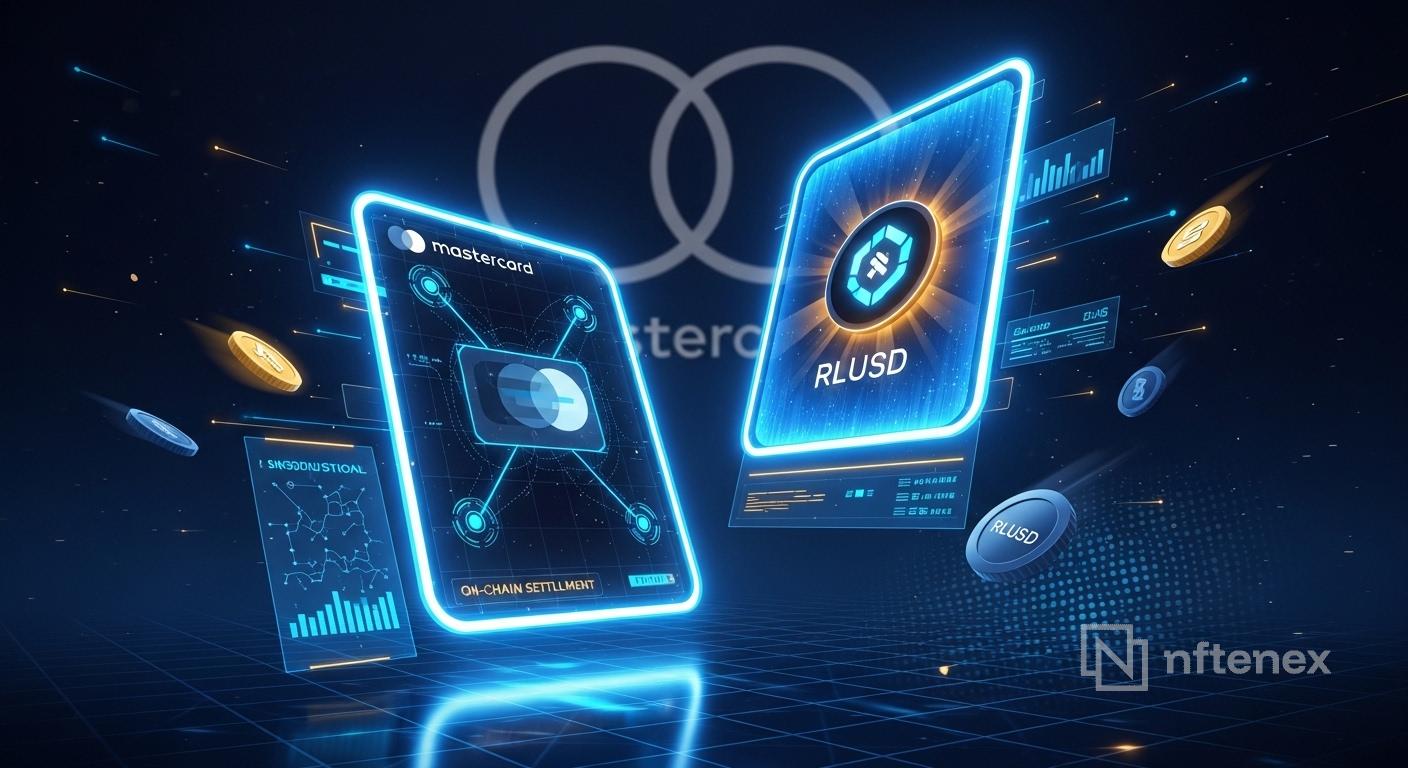
- Ripple joins Mastercard Crypto Partner Program to advance on-chain card payment settlement.
- Pilot uses RLUSD with WebBank and Gemini; settles on XRP Ledger.
- Program convenes 85+ firms; aims regulatory alignment, faster settlement, improved reconciliation.
As reported by CCN (https://www.ccn.com/news/crypto/ripple-comeback-40b-valuation-rlusd-mastercard-partnership/?utm_source=openai), Ripple joined Mastercard’s Crypto Partner Program to advance on‑chain payments. The report notes the initiative convenes more than 85 crypto‑native firms, financial institutions, and payments providers. It also details a pilot that settles card transactions on‑chain using Ripple’s RLUSD stablecoin alongside WebBank and Gemini. The coverage indicates settlement is expected to occur on the XRP Ledger with near‑real‑time performance.
According to XT.com (https://www.xt.com/en/blog/post/ripple-and-mastercard-partner-with-webbank-and-gemini-to-pilot-rlusd-stablecoin-for-faster-global-card-payments?utm_source=openai), the collaboration is structured for regulatory alignment, pairing a regulated stablecoin with a fully licensed bank in WebBank. This positioning is presented as a route to enterprise adoption where compliance is a prerequisite. The post also notes that specifics on fees, chargebacks, and rollout timelines remain limited at this stage.
As reported by Hokanews (https://www.hokanews.com/2026/01/mastercard-integrates-ripple-rlusd-in.html?utm_source=openai), industry commentary suggests consumers may see little change because the innovation focuses on backend settlement. The operational impact is expected to concentrate on speed, cost, and reconciliation.
Ripple RLUSD stablecoin and on-chain payment settlement mechanics
Mechanically, card authorizations and point‑of‑sale flows remain familiar, while settlement occurs by transferring RLUSD on a public chain. WebBank’s participation keeps funds movement within a regulated banking perimeter, and Gemini is positioned for crypto infrastructure functions.
Program leaders have framed the objective as bringing stablecoin rails into mainstream payments under established network rules. “Through our partnerships with Ripple, Gemini, and WebBank, we’re using our global payments network to bring regulated, open‑loop stablecoin payments into the financial mainstream,” said Sherri Haymond, Executive Vice President, Digital Commercialization at Mastercard.
Because settlement shifts to chain‑based RLUSD transfers, potential benefits include shorter settlement windows and reduced reconciliation overhead for participants. Exact fee structures, consumer protections, chargebacks, and geographic timelines have not been detailed publicly and may be clarified through the pilot.
RLUSD versus XRP: what’s used for settlement here
As outlined above, the settlement asset in this workflow is Ripple’s RLUSD stablecoin rather than XRP. RLUSD is designed for value stability to support payments, whereas XRP is a separate digital asset within Ripple’s ecosystem.
Under this design, the stablecoin serves as the on‑chain settlement medium for card flows tested in the pilot. This delineation helps avoid confusion between a payments stablecoin and a market‑traded asset.
| Disclaimer: The content on nftenex.com is provided for informational purposes only and should not be considered financial or investment advice. Cryptocurrency investments carry inherent risks. Please consult a qualified financial advisor before making any investment decisions. |