
Coinbase is cutting approximately 700 employees, roughly 14% of its global workforce, as CEO Brian Armstrong points to a weakening crypto market and a strategic pivot toward AI-driven operations as the forces behind the restructuring.
The company disclosed the plan in a Form 8-K filed on May 5, 2026, stating that the reduction affects approximately 700 positions as of the May 1, 2026 headcount. Coinbase expects to incur $50 million to $60 million in restructuring expenses, mostly from cash severance and termination benefits.
The restructuring is expected to be substantially complete by the end of the second quarter of 2026.
Why Coinbase Is Reducing Its Workforce by 14%
Armstrong framed the decision around two distinct pressures. In a blog post titled "Building a Leaner and Faster Coinbase," the CEO wrote that the company is "currently in a down market" and needs to adjust its cost structure now.
"We're currently in a down market and need to adjust our cost structure now."
Brian Armstrong, Coinbase CEO
The second driver is operational. Armstrong argued that AI now lets much smaller teams ship work far faster, and Coinbase intends to rebuild around a leaner, AI-native model. This is not a temporary belt-tightening; it is a stated redesign of how the company plans to operate going forward.
Jefferies analyst Daniel T. Fannon noted that "April (trading) activity across digital asset exchanges has slowed," providing independent confirmation of the market weakness Armstrong cited. The slowdown in trading volumes directly impacts Coinbase's transaction-fee revenue, its largest income line.
What the Workforce Reduction Signals for Coinbase Operations
A 14% headcount cut tied explicitly to AI adoption signals something beyond a typical cyclical layoff. Coinbase is telling investors that it expects to maintain or grow output with fewer people by embedding AI into workflows, team structures, and internal tooling.
The $50 million to $60 million restructuring charge, disclosed in the SEC filing, reflects the upfront cost of severance. But the longer-term goal is a permanently lower cost base, not a temporary reduction that reverses when markets recover.
COIN shares rose approximately 3.3% in premarket trading after the announcement, suggesting Wall Street viewed the restructuring as a positive signal on cost discipline rather than a sign of deeper trouble.
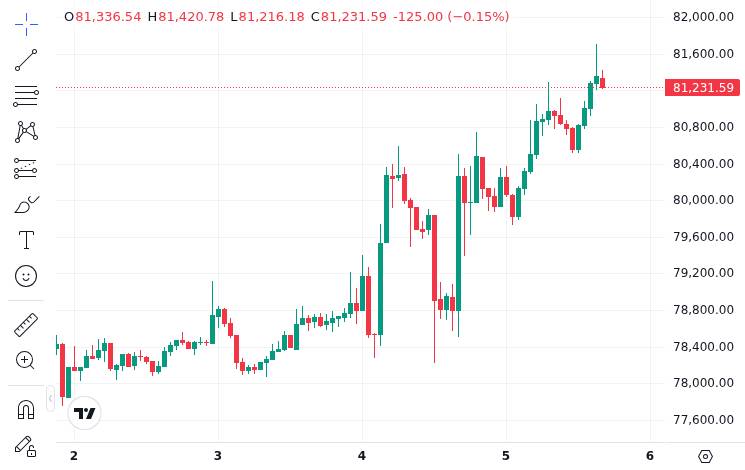
Bitcoin traded at $81,409 with a 24-hour gain of roughly 3.5% during the news cycle, and the total crypto market cap stood at approximately $2.77 trillion. The Fear & Greed Index read 50, squarely in neutral territory. These figures suggest the Coinbase layoff is a company-specific cost decision, not a response to an active market-wide crash.
Why Coinbase's Move Matters for the Broader Crypto Business Landscape
Coinbase is one of the largest publicly traded crypto companies, and its staffing decisions ripple through the sector. When the exchange cuts 14% of its workforce and ties the move to AI, it sets a template that smaller firms are likely to follow, much as the fintech sector's push into emerging markets has reshaped how crypto companies think about growth.
The dual framing matters. Market weakness alone would suggest a temporary pullback. But pairing layoffs with an AI-native operating model implies a structural shift in how crypto exchanges staff their businesses. This echoes broader conversations about how financial institutions are rethinking technology-driven operations across the industry.

Exchange reserve data shows that Bitcoin held on centralized platforms has been declining steadily, a trend that compounds the revenue pressure on trading-fee-dependent businesses like Coinbase. Lower reserves typically correlate with reduced trading activity on those venues.
For crypto companies navigating the current environment, including those focused on long-term Bitcoin accumulation strategies, the Coinbase restructuring underscores a hard reality: even the sector's largest players are choosing leaner operations over growth-mode hiring.
Coinbase expects the restructuring to wrap up by the end of Q2 2026. Whether the AI-native model delivers the efficiency gains Armstrong promised will become visible in the company's next earnings report.
Disclaimer: This article is for informational purposes only and does not constitute financial or investment advice. Cryptocurrency and digital asset markets carry significant risk. Always do your own research before making decisions.