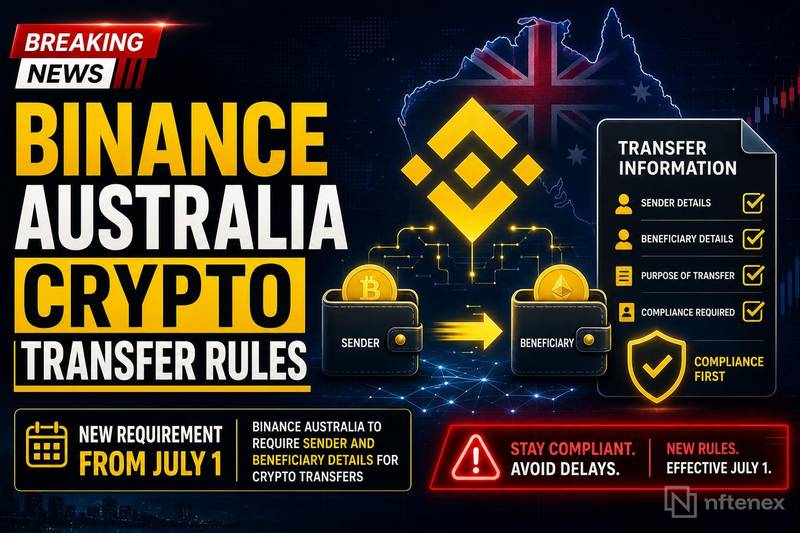
Binance Australia to Require Sender and Beneficiary Details for Crypto Transfers From July 1
- Stacey George
- May 24, 2026
- Policy
- 0 Comments
Binance Australia will require users to provide sender and beneficiary details for all crypto transfers starting July 1, aligning the exchange with tightening compliance standards in the country.
The policy change means that Australian users sending or receiving cryptocurrency through Binance will need to submit identifying information about both parties in a transfer. Binance Australia confirmed the update ahead of the July 1 deadline.
TLDR KEY POINTS
- Binance Australia will mandate sender and beneficiary information for crypto transfers from July 1
- The requirement applies to deposits, withdrawals, and transfers involving third-party wallets
- The move aligns with Australia’s updated AML/CTF compliance framework overseen by AUSTRAC
What Binance Australia’s July 1 transfer rule changes for users
“Sender details” typically refers to the name and account information of the person initiating a crypto transfer. “Beneficiary details” covers the same for the recipient. Under the new rule, Binance Australia users will need to provide this data when moving crypto on or off the platform.
The requirement covers deposits, withdrawals, and transfers to or from external wallets. Users who regularly move funds between self-hosted wallets and their Binance accounts should expect additional verification steps after the deadline takes effect.
What changes for deposits, withdrawals, and third-party transfers
For incoming transfers, users may be asked to identify the sender before funds are credited. For outgoing transfers, beneficiary information will need to accompany the transaction. This mirrors the “travel rule” framework adopted by financial regulators in multiple jurisdictions, a development that intersects with how traditional financial institutions are deepening their crypto involvement under clearer regulatory guardrails.
Why sender and beneficiary details matter in crypto compliance
The requirement is rooted in anti-money laundering and counter-terrorism financing (AML/CTF) regulations. Australia’s financial intelligence agency, AUSTRAC, has been updating its AML/CTF transitional rules to bring digital asset service providers in line with traditional financial institutions.
By collecting sender and beneficiary data, exchanges create an auditable trail for each transfer. This allows regulators to trace fund flows and flag suspicious activity, a standard already required of banks and money transfer services.
How this could affect transfer speed and user experience
Users should expect some friction. Transfers that previously required only a wallet address may now involve form submissions or identity checks before processing. During the initial rollout, delays are possible as Binance refines its verification workflows.
For users who primarily trade within the exchange, the impact will be minimal. The changes mainly affect those who move assets between Binance and external wallets or other platforms. This kind of operational shift echoes debates in the broader market about individual custody versus centralized exchange reliance.
What the update could mean for Australia’s crypto market
Binance is one of the largest exchanges serving Australian users. Its adoption of sender and beneficiary requirements reflects broader regulatory expectations from AUSTRAC rather than a Binance-specific initiative, as crypto.news reported. Other exchanges operating in Australia may follow with similar measures.
The direction in Australia is toward treating crypto transfers with the same scrutiny applied to wire transfers. As compliance frameworks tighten across the industry, even protocol-level governance decisions, such as recent XRP network amendments reaching full validator consensus, reflect an ecosystem maturing alongside regulatory demands.
Does this signal a wider compliance trend?
The July 1 date aligns with AUSTRAC’s broader reform timeline. Australian crypto users, whether on Binance or other platforms, should prepare for an environment where transfer-level identity requirements become standard rather than exceptional.
Users planning large transfers or regular movements between wallets and exchanges before July 1 should familiarize themselves with the new data requirements early to avoid disruptions once the rule takes effect.
Disclaimer: This article is for informational purposes only and does not constitute financial or investment advice. Cryptocurrency and digital asset markets carry significant risk. Always do your own research before making decisions.